The Ultimate Guide to TV and Bluetooth Speakers in the UK
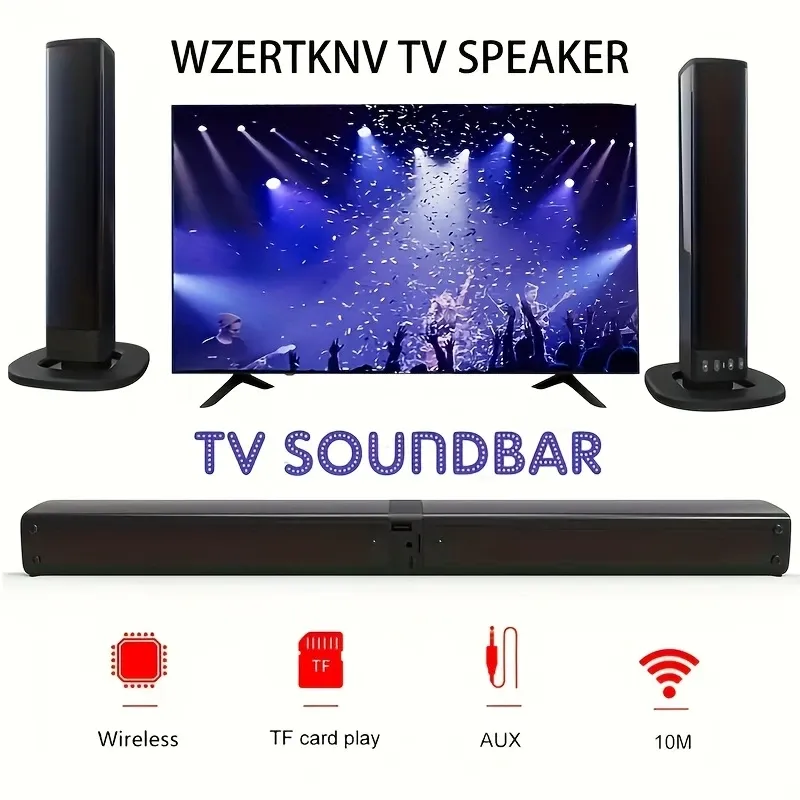
Short answer: TV and Bluetooth speakers can work together, and for most UK homes the simplest cure for thin, muffled TV sound is a compact soundbar connected by optical, with Bluetooth kept for phone music. Bluetooth straight from a television can lag on live broadcasts, so a wired link (optical or AUX) is the reliable everyday choice. If your real problem is not being able to hear the dialogue, a bar that centres speech helps far more than turning the TV up.
Modern flat-screen TVs look wonderful and sound weak, and the questions people ask about TV and Bluetooth speakers usually come from the same place: the dialogue is hard to follow, and the adverts and action scenes are suddenly far too loud. This guide explains your options in plain English, how each one connects, where Bluetooth helps and where it does not, and when a compact soundbar is the sensible fix.
Why flat-screen TV sound is so thin
To stay slim, TVs hide small drivers that fire downwards or backwards, so speech loses its clarity and there is no room for real bass. The classic symptom is watching the news or a drama with the subtitles on because the voices are buried under the background music — then flinching when an advert or an action scene jumps in volume and you reach for the remote again. It is not your hearing; it is physics.
TV and Bluetooth speakers: what are your options?
There are three broad routes, and it helps to know the difference before you spend:
- Bluetooth speakers connect wirelessly from a phone, tablet or a TV that supports Bluetooth audio. They are portable and tidy, but they are designed for music, not centred TV dialogue.
- Wireless (Wi-Fi/multi-room) speakers stream over your home network and can play around the house, but they add cost and setup and still are not built to anchor speech to the screen.
- Soundbars sit under the TV, connect with a single cable and are tuned specifically to make dialogue clear and add bass. For most people wanting better television sound, this is the direct answer.
In short: "wireless speaker" and "Bluetooth speaker" describe how audio travels, while a soundbar describes a device built for the job. If you are choosing between scattered wireless speakers and one bar, our guide to wireless speakers for TV compares them in detail.
How to connect: optical, HDMI ARC, Bluetooth and AUX
Four connections cover almost every UK living room:
- Optical (TOSLINK): the reliable default. Plug it in, set the TV's digital audio output to PCM or Bitstream, and you are done. It carries clean stereo and Dolby Digital, though not Dolby Atmos.
- HDMI ARC/eARC: lets one remote control TV and speaker volume together, and passes higher-resolution formats. Only useful if both your TV and the speaker have it.
- Bluetooth: ideal for music from a phone; less ideal for live TV because of possible lip-sync delay.
- AUX (3.5mm): a simple analogue fallback for older or basic TVs.
If a soundbar has no HDMI ARC, that is not a problem for everyday viewing — you simply use optical or AUX and control volume with the bar's own remote.
Does Bluetooth actually work for watching TV?
For music, yes, happily. For live television, be realistic: Bluetooth can drift out of sync so lips and words no longer match, which is maddening during dialogue-heavy drama. The dependable approach is to watch TV over a wired link and save Bluetooth for streaming a playlist once the programme ends. That way you get the convenience without the sync headaches.
Matching sound to your room and your hearing
If you mainly want to hear the dialogue clearly at a comfortable volume, prioritise a speech-forward soundbar over raw wattage or surround channels. Look for a model that connects with the included optical cable so you do not have to rely on a phone or an app to get going, and that comes with a simple physical remote for anyone who would rather not learn a new gadget. In a normal lounge you do not need a separate subwoofer and a set of surrounds cluttering the floor — a tidy bar with a built-in subwoofer is enough to transform everyday viewing.
When a compact soundbar is the smarter fix
For clearer speech with the least fuss, a compact bar such as the Barvix 132W Compact Soundbar (£199.98) covers the essentials: a 16-inch frame that fits most UK stands, a built-in subwoofer so there is no separate bass box, Bluetooth 5.4 for music and optical plus 3.5mm AUX for the TV, an included remote, and an app EQ for film or quieter night listening. It has no HDMI ARC, so you connect by optical or AUX and use its own remote — a fair trade for simplicity. On the product page it carries 4.7 stars from 79 reviews, with free UK next-day delivery, 30-day returns and a 12-month warranty plus UK support.
New to the whole category and shopping on a budget? Our best soundbar under £200 guide explains how to read the specs honestly.
Shop the Barvix 132W Compact Soundbar — £199.98
Frequently asked questions
Can you use TV and Bluetooth speakers together?
Yes. Many setups combine a wired TV connection with Bluetooth for phone music. For watching TV, a wired link such as optical is the most reliable, while Bluetooth is best kept for streaming music between programmes.
Is Bluetooth good for watching TV?
Bluetooth is convenient but can introduce lip-sync delay on live broadcasts, where sound lags slightly behind the picture. For everyday TV a wired optical or AUX connection stays in sync, so most people use Bluetooth for music and a cable for television.
What is the most reliable way to connect speakers to a TV?
For most UK TVs an optical (TOSLINK) cable is the dependable everyday link: set the TV audio output to PCM or Bitstream and it works in minutes. HDMI ARC adds one-remote control where both devices support it, and a 3.5mm AUX lead covers older sets.
Do I need a separate subwoofer and surround speakers for clearer dialogue?
No. Clearer dialogue comes from a forward-facing, speech-tuned centre, not from more boxes. A compact soundbar with a built-in subwoofer lifts voices and adds bass without cables trailing across the room.